


Stay ahead of competitors with PetroSync ASME Training. Improve productivity, operational efficiency, and compliance for your industry team.
In today’s highly regulated industrial landscape, speed and compliance decide who wins the next contract—and who gets left behind. As a business leader, you already know this uncomfortable truth: your competitors are not waiting. They are investing in people, systems, and certified expertise while others hesitate.
If your team lacks up-to-date ASME competency, the risk is not theoretical. It is operational, financial, and reputational. This is where PetroSync ASME Training becomes a strategic decision—not just another technical course.
When Your Competitors Move Faster Than Your Team
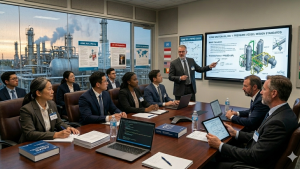
You may have experienced this scenario before. A tender comes in. The scope is clear, but the requirements are strict—ASME compliance, certified understanding, documented best practices. Meanwhile, your competitor responds confidently, supported by a team trained under recognized ASME standards.
That confidence does not come from experience alone. It comes from structured learning and standardization.
Companies that invest in professional training consistently report higher team productivity, as employees make faster, more accurate decisions with fewer revisions and rework. Industry studies show that structured technical training can improve task efficiency by up to 20–30%, particularly in regulated engineering environments.
When your team understands the standard, they stop guessing—and start executing.
The Hidden Cost of Delaying ASME Competency in Your Organization
Delaying training often feels harmless. In reality, it quietly drains your resources.
Without proper ASME knowledge, organizations face:
Longer approval cycles
Increased inspection findings
Higher risk of non-compliance
Costly rework and project delays
Operational inefficiency is rarely visible on day one, but it compounds over time. According to operational excellence benchmarks, inefficient workflows can increase project costs by 15–25% due to misalignment between engineering, inspection, and execution teams.
This is why programs such as ASME Section I Training are critical for professionals involved in power boilers and high-pressure systems. The training helps your team interpret requirements correctly the first time—reducing errors before they become expenses.
How Industry Leaders Use ASME Training to Protect Market Position
Industry leaders do not wait for compliance issues to appear. They prevent them.
Many forward-thinking organizations combine technical training with digital tools, including AI-powered chatbots, to support daily operations. AI chatbots are increasingly used to:
Provide instant access to standards-related guidance
Reduce repetitive internal queries
Support engineers with quick reference checks
Research shows that AI-driven support tools can save up to 30–40% of administrative and support time, translating directly into cost savings and improved operational focus. When paired with formal training like ASME PCC-2 Training, teams become both knowledgeable and efficient—able to act fast without compromising compliance.
This combination allows leaders to scale expertise across the organization, not just rely on a few senior specialists.
Staying Relevant in a Regulated Industry: A Decision You Can’t Postpone
Regulated industries do not reward hesitation. Clients, regulators, and partners expect clarity, confidence, and compliance—every time.
Whether your team handles process piping or pressure vessel design, structured learning remains essential. Programs like ASME B31.3 Training and ASME Section VIII Training are designed to help professionals translate complex codes into practical, defensible engineering decisions.
When your engineers speak the same technical language as inspectors and clients, trust increases. Projects move faster. Risks go down.
And perhaps most importantly—you stop losing opportunities to competitors who are simply better prepared.
This press release has also been published on VRITIMES